
Trade Gold
Smarter
London and New York overlap usually creates the strongest volatility.
Fed meetings, CPI inflation data, and NFP reports heavily impact gold.
Avoid oversized positions because gold can spike aggressively in seconds.
Venturing into gold trading can feel like stepping into a wild river without a map. But once you get your feet wet, you will see it is not as scary as it looks. Many beginners start with forex gold trading because it lets them trade gold without owning a single shiny bar. Think of it like betting on the weather instead of catching the rain itself.
Gold has been a safe harbor for centuries, a quiet rock in a stormy financial sea. In this article, we will break down the basics of online gold trading, including market hours, simple strategies, risk management, and common questions for beginners. You do not need a vault or a suitcase full of money. Just a laptop and a little curiosity will do.
What Is Gold Trading? Breaking Down the Basics
Let us start with a simple picture. Imagine you have two ways to profit from a gold rush. You can either dig for real gold with a pickaxe, or you can sell shovels and maps to the miners. Gold trading is more like selling shovels. You do not need to hold heavy bars in your hands. You just need to guess whether the price will go up or down.
Physical gold trading means buying real coins or bars. You can touch them. You can store them in a safe. But they are hard to sell quickly, and you pay extra for shipping and insurance.
Spot gold trading is different. Here, you trade the current price of gold without waiting for delivery. It is like pointing at a screen and saying “I want this price right now.” No metal ever changes hands.
So, is gold trading profitable? The honest answer is yes and no. Some traders make a living from it. Others lose money fast. The difference is not luck. It is preparation, patience, and knowing the rules of the road.
Gold Trading Hours When the Market Sleeps and Wakes
Gold does not take a coffee break. Well, almost not. Gold trading hours run nearly 24 hours a day from Monday to Friday. But not all hours are created equal. Think of it like fishing. You can cast your line at any time, but the fish bite only during certain hours.
Gold trading hours in the USA start Sunday evening and end Friday afternoon Eastern time. The busiest time is when London and New York are both open. That is from 8 AM to 1 PM Eastern. During these hours, prices move fast. Trades happen in the blink of an eye.
Gold trading time in India follows a different clock. Indian traders prefer the evening hours when London and US markets overlap. That is late night in Mumbai and Delhi. Many Indian brokers offer trading until 11:30 PM or later.
London gold trading hours run from 3 AM to 12 PM Eastern. London is the old lion of gold trading. It has been the center of the gold universe for hundreds of years. When London opens, the market stretches its arms and yawns.
Comex gold trading hours are based in New York. Comex is the main futures exchange for gold in America. It opens at 6 PM Eastern Sunday and closes at 5 PM Eastern Friday. There is a short break each day between 5 PM and 6 PM. Think of it as the market taking a quick nap.
Here is a simple breakdown of gold trading sessions:
| Session | Eastern Time (USA) | Activity Level |
|---|---|---|
| Sydney | 6 PM – 2 AM | Quiet |
| Tokyo | 7 PM – 3 AM | Moderate |
| London | 3 AM – 12 PM | High |
| New York | 8 AM – 5 PM | Very High |
What time does gold trading close on Friday? It closes at 5 PM Eastern. Then the market sleeps until Sunday evening. Gold trading weekend activity is almost dead. You can still find some brokers offering weekend trading, but it is like swimming in a empty pool. There is no liquidity.
When does gold trading open on Sunday? It opens at 6 PM Eastern. That is when the Asian markets begin their week. The first few hours can be unpredictable. Prices sometimes gap up or down based on weekend news.
To wrap it up, the best gold trading schedule for beginners is simple. Trade during the London-New York overlap. That is the heart of the market. The rest of the time, you can watch and learn.
Gold Trading Strategies and Analysis Reading the Map Before You Drive
Reading The Gold Market Like A Professional
Jumping into gold trading without a plan is like driving blindfolded. You might get lucky for a mile or two. But sooner or later, you will crash. That is why every smart trader needs a gold trading strategy. Think of it as your road map. It tells you when to enter, when to exit, and when to just sit on your hands.
Trend Following The Easy Path

The simplest best gold trading strategy for beginners is trend following. Imagine gold is a train. Your job is not to guess where the train will go. Your job is to jump on board after the train has already started moving in one direction.
If gold prices have been climbing for three days in a row, that is an uptrend. A trend follower buys and rides the wave. If prices have been falling, a trend follower sells short or stays away. No fighting the market. No trying to catch the exact bottom. Just following the path of least resistance.
Breakout Trading When the Tiger Jumps the Fence
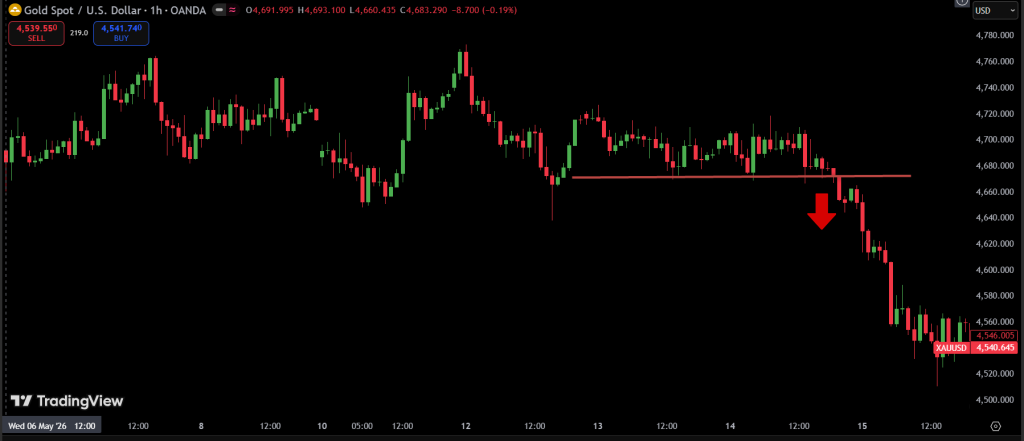
Sometimes gold trades inside a quiet range. The price bounces between two levels like a ping pong ball. Traders call this consolidation. A profitable gold trading strategy is to wait for the price to break out of that range.
Think of it like a tiger pacing back and forth inside a cage. Everyone knows the tiger will jump eventually. The breakout trader waits patiently. When the tiger finally leaps, the trader follows. No guessing. Just reacting to the breakout.
Support and Resistance The Floor and the Ceiling
Support is a price level where gold stops falling and bounces back up. Imagine dropping a rubber ball on a concrete floor. The floor is support. Resistance is a price level where gold stops rising and falls back down. That is the ceiling.
Gold trading analysis often starts with drawing these levels on a chart. They are not magic lines. They are simply places where many traders have bought or sold before. The more times a level has been tested, the stronger it becomes.
Technical Indicators The Rearview Mirror
An indicator is a tool that helps you see the market more clearly. But remember, indicators are like a rearview mirror. They tell you where gold has been, not where it is going. Do not fall in love with them.
The best indicator for gold trading depends on your style. Here are three popular ones for beginners:
| Indicator | What It Does | Best For |
|---|---|---|
| Moving Average | Smooths out price noise | Trend following |
| RSI (Relative Strength Index) | Shows overbought or oversold conditions | Finding reversals |
| MACD | Shows momentum and trend strength | Confirming breakouts |
Gold trading signals are buy or sell alerts generated by these indicators. Some traders pay for signal services. Others build their own systems. A simple signal could be “buy when the 50 period moving average crosses above the 200 period moving average.” That is it.
Fundamental Analysis The Big Picture
Charts tell you what happened. Fundamentals tell you why. Gold trading expectations often shift based on news and economic data. Here are the big drivers of gold prices:
- Interest rates. When rates go up, gold often goes down. Gold pays no interest. Why hold gold when you can earn 5 percent in a bank account?
- The US dollar. Gold and the dollar usually move in opposite directions. A weak dollar makes gold cheaper for foreign buyers.
- Inflation. Gold is a hedge against rising prices. When inflation heats up, gold often follows.
- Geopolitical news. War, elections, and trade fights scare people. Scared people buy gold.
Gold Trading Automation Letting the Robot Drive
Gold trading automation means using software to execute trades for you. You set the rules. The robot follows them without fear or greed. No staying up until 2 AM. No revenge trading after a loss.
Automation works well for simple strategies like trend following or breakout trading. But it is not magic. A bad strategy run by a robot is still a bad strategy. Always test your rules on a demo account before going live.
The Beginner’s Guide to Building a Strategy
Here is a simple gold trading guide for someone who has never placed a trade before:
- Pick one session. The London-New York overlap is best.
- Choose one indicator. A 20 period moving average is plenty.
- Set one rule. Buy when price closes above the average. Sell when price closes below.
- Test it on a gold trading demo account for two weeks. No real money.
- Write down every trade in a journal. What worked? What did not?
- Only then, start with a tiny real account.
The goal is not to get rich overnight. The goal is to survive long enough to learn. Most beginners quit because they lose money too fast. A slow, boring approach wins the race.
Is Gold Trading Halal or Haram? A Simple Breakdown for Muslim Traders
If you are a Muslim trader, you have probably asked this question before. The answer is not a simple yes or no. It depends on how you trade. Let us break it down in plain English.
The Basic Rule of Gold in Islam
In Islamic finance, gold is considered a currency, not a commodity. That means special rules apply. The Prophet Muhammad said that gold must be exchanged hand to hand, weight for weight, with no delay. Scholars call this “spot” trading. You pay. You take delivery. Right here, right now.
So gold trading halal or haram? Spot trading where you own the gold immediately is generally considered halal. No waiting. No borrowing. No interest.
Where Problems Start
Most online gold trading today is not spot trading. It is derivative trading. You are betting on the price without ever owning the gold. You borrow money from the broker. You pay interest if you hold overnight. That is where things get tricky.
Here is a simple breakdown of common gold trading types and their Islamic ruling:
| Type of Gold Trading | How It Works | Islamic Ruling |
|---|---|---|
| Physical gold (buy and hold) | You buy real bars or coins | Halal |
| Spot gold with immediate delivery | Pay now, take gold now | Halal |
| CFD gold trading | Bet on price, no ownership, pays interest | Haram for most scholars |
| Futures gold trading | Contract for future delivery | Haram (delayed delivery) |
| Leveraged gold trading | Borrow money to trade | Haram if interest is involved |
The Good News for Muslim Traders
Many brokers now offer Islamic or swap free accounts. These accounts do not charge overnight interest. You can hold a gold trade for weeks without paying a penny in interest. The broker makes money another way, like wider spreads or flat fees.
But here is the catch. Some scholars say even swap free accounts are not truly halal if you never take delivery of the gold. Other scholars say it is fine as long as there is no interest. The best advice is to speak to a trusted local scholar. Every trader’s situation is a little different.
A Simple Rule of Thumb
If you want to stay on the safe side, stick to physical gold or spot trading with immediate delivery. Avoid futures. Avoid overnight interest. And never trade with money you cannot afford to lose. That is good advice for any trader, Muslim or not.
Gold Trading Without Leverage vs With Leverage The Slow Horse and the Rocket Ship
Imagine you have two ways to climb a mountain. You can walk up slowly with a heavy backpack. That is trading without leverage. Or you can strap on a rocket pack and blast up at full speed. That is trading with leverage. Both can get you to the top. But one will break your bones if you fall.
What Is Leverage in Plain English
Leverage is borrowed money. Your broker lends you cash to control a bigger position. If you have 100 dollars and your broker offers 10 to 1 leverage, you can trade like you have 1000 dollars. Every price move is multiplied by 10. Gains are bigger. Losses are also bigger.
Think of leverage like a magnifying glass. It does not change the sun. It just makes the sun burn hotter.
Gold Trading Without Leverage The Slow and Steady Path
Gold trading without leverage means you put up the full value of the trade. If one ounce of gold costs 2000 dollars, you need 2000 dollars in your account. No borrowing. No interest. No margin calls.
Here is why some traders prefer no leverage:
- Less stress. A 1 percent move only changes your account by 1 percent. You can sleep at night.
- No interest charges. You can hold a trade for months without paying a penny.
- No margin calls. The broker will never suddenly close your position because prices moved against you.
- Better for beginners. You learn to trade without the fear of blowing up your account in one hour.
The downside is that you need more money to start. A 2000 dollar trade with no leverage makes 20 dollars on a 1 percent move. That is a small reward for a big risk. Some traders find it boring.
Gold Trading Leverage The Double Edged Sword
Gold trading leverage is the fast lane. With 50 to 1 leverage, a 100 dollar account can control 5000 dollars worth of gold. A tiny price move can double your money in minutes. A tiny move the other way can wipe you out just as fast.
Here is an example. You have 200 dollars. Your broker offers 100 to 1 leverage. You buy gold worth 20,000 dollars. Gold moves up 1 percent. You just made 200 dollars. That is a 100 percent return in one day. Amazing, right?
Now flip the script. Gold moves down 1 percent. You just lost 200 dollars. Your account is empty. The trade is over. You are done.
Gold trading risk management becomes critical when you use leverage. A trader without a stop loss is like a pilot without a parachute. One wrong move and you are falling.
The Middle Path Using a Demo Account First
Here is a secret that most beginners ignore. You can test both styles without risking a single dollar. A gold trading demo account gives you fake money to trade with real market prices.
Open a demo account. Trade with high leverage for two weeks. Then trade without leverage for two weeks. See which style fits your personality. Some people love the rush of leverage. Others hate the anxiety.
The demo account is your sandbox. Break things there. Lose fake money there. Learn your lessons there. Then, and only then, open a small real account.
A Simple Comparison Table
| Feature | Without Leverage | With Leverage |
|---|---|---|
| Money needed to start | High | Low |
| Potential profit | Slow | Fast |
| Potential loss | Slow | Fast |
| Stress level | Low | High |
| Interest charges | None | Often yes |
| Best for | Beginners, long term traders | Experienced, short term traders |
The Golden Rule
Here is the one rule that separates successful traders from broke ones. Never risk more than 1 to 2 percent of your account on a single trade. If you have 1000 dollars, your stop loss should not lose more than 10 to 20 dollars.
Leverage does not change this rule. It only changes how many ounces you can control. A smart trader uses leverage to trade bigger size but keeps the same small risk per trade. A foolish trader uses leverage to bet the whole farm on one coin flip.
Be the smart one.
Risk Management and Trading Psychology Keeping Your Head When Others Are Losing Theirs
Trading gold is easy. Anyone can click a button and buy or sell. The hard part is not losing money. The hard part is staying calm when the market goes crazy. That is where gold trading risk management comes in. Think of it like a seatbelt. You hope you never need it. But you wear it every single time.
Why Most Beginners Blow Up Their Accounts
Here is the sad truth. Most new gold traders lose money. Not because they are stupid. Not because they picked the wrong strategy. They lose because they have no risk management. They bet too big. They hold losing trades too long. They revenge trade after a loss.
Imagine you are walking across a frozen lake. Risk management is testing the ice before each step. No testing means you will eventually fall through. It is not a matter of if. It is a matter of when.
The One Percent Rule The Golden Rule of Trading
This rule is so important that it deserves its own heading. Never risk more than 1 percent of your account on a single trade. Not 2 percent. Not 5 percent. One percent.
Here is what that looks like in real life:
| Account Size | 1 Percent Risk | Stop Loss Distance |
|---|---|---|
| $500 | $5 | Very tight |
| $1,000 | $10 | Tight |
| $5,000 | $50 | Moderate |
| $10,000 | $100 | Comfortable |
| $50,000 | $500 | Loose |
If you have a $500 account and you lose 5 trades in a row while risking only 1% per trade, you are down just $25. That is nothing. You can keep trading tomorrow without panic or emotional pressure.But if you risk 10% per trade, five losses in a row can wipe out half your account. That is a hole many traders never recover from.
Gold trading risk management starts and ends with this rule. Follow it and you can survive a bad week. Break it and you will eventually go broke.
Stop Losses Your Best Friend
A stop loss is an automatic order that closes your trade if the price moves against you by a certain amount. You set it when you enter the trade. You do not have to think about it again. It is like a lifeguard watching your back while you swim.
Here is an example. You buy gold at $2,000 per ounce and set a stop loss at $1,990. If gold drops to $1,990, your trade closes automatically. You lose $10 and live to fight another day.
Traders who do not use stop losses tell themselves stories. “Gold will bounce back.” “It is just a small dip.” “I will watch it closely.” These are lies we tell ourselves when we are scared to take a small loss. Then the small loss becomes a big loss. The big loss becomes a disaster.
Do not be that trader. Use a stop loss on every single trade. No exceptions.
Understanding Pips in Gold Trading
A pip is the smallest price move in trading. For gold, one pip is usually $0.01 per ounce. That does not sound like much. But remember, you are trading multiple ounces. Those tiny pips add up fast.
Pips in gold trading work like this. You buy one ounce of gold at $2,000. The price moves to $2,001. That is a 100-pip move higher. You just made $1. Not exciting.But if you buy 100 ounces, that same 100-pip move makes you $100.
Knowing how to count pips helps you set your stop loss. If you want to risk $10 on a trade and each pip is worth $1, your stop loss should be 10 pips away. Simple math. Simple risk management.
Position Sizing How Much Is Too Much
Position sizing means deciding how many ounces to buy or sell. It is the bridge between your risk per trade and your stop loss distance.
Here is the formula:
Position size = (Account risk) divided by (Stop loss in dollars per ounce)
Let us walk through an example. You have a $1,000 account. You want to risk 1%, which is $10.
Your stop loss is 100 pips away, which equals $1 per ounce. That means your position size should be 10 ounces ($10 divided by $1). It is a small trade. Boring, but safe.
Now imagine you skip the calculation and buy 100 ounces with that same $10 stop loss. If gold hits your stop, you lose $100. That is 10% of your account gone in a single trade. One bad loss and you are already bleeding.
Do the math every single time. It takes ten seconds. It saves you months of pain.
Trading Psychology The Voice in Your Head
Gold trading for beginners often fails because of emotions, not bad analysis. The market does not care about your feelings. It does not know you need rent money. It does not know you had a bad day at work. It just moves.
Here are the three biggest emotional traps and how to avoid them.
Trap one: Revenge trading. You lose $20 on a trade and get angry. Then you double your next trade trying to win back the $20 fast. You lose again. Now you are down $60. So you double again. This is the fast path to a blown account.
The fix is simple. After a loss, close the chart. Walk away for one hour. Come back only when you are calm.
Trap two: Moving the stop loss. You set a stop loss at 100 pips. Price gets close. You tell yourself “just a little more room.” You move the stop to 150 pips. Price hits that too. You move it again. This is how a small loss becomes a giant loss.
The fix is discipline. Never change a stop loss after you set it. Treat it like a contract you signed in blood.
Trap three: FOMO or fear of missing out. You see gold shooting up. Everyone on social media is talking about it. You buy at the top because you are scared to miss the move. Then price crashes. You are left holding a heavy bag.
The fix is patience. There will always be another trade. Always. Missing one trade will not make you poor. Chasing a trade and losing will.
The Trading Journal Your Mirror
You cannot fix what you do not measure. A trading journal is a simple notebook or spreadsheet where you write down every trade. Here is what to track:
| Field | What to Write |
|---|---|
| Date and time | Monday, 10 AM Eastern |
| Direction | Buy or sell |
| Entry price | $2000 |
| Exit price | $2010 |
| Stop loss | $1990 |
| Profit or loss | +$10 |
| Why you entered | Support bounce |
| How you felt | Nervous but followed the plan |
After 20 trades, you will see patterns. Maybe you lose money on Tuesday mornings. Maybe you win on London opens. The journal does not lie. It shows you exactly where you need to improve.
A Simple Risk Management Checklist for Every Trade
Before you click that buy or sell button, ask yourself these five questions:
- What is my account size? (Write it down.)
- What is 1 percent of my account? (That is my risk per trade.)
- Where is my stop loss? (Exactly how many pips?)
- What is my position size? (Do the math from the formula above.)
- Am I calm? (If not, walk away.)
If you answer all five, you are ready to trade. If you skip even one, you are gambling, not trading. There is a big difference.
Conclusion Putting It All Together
Gold trading is not a get rich quick scheme. It is a skill. Like playing the guitar or learning a new language. The first few weeks feel awkward. You make mistakes. You feel lost. But with practice, the pieces start to fit together.
Let us take a step back and look at the big picture. Gold trading is simply betting on whether the price will go up or down. You do not need to own physical bars. You do not need a fortune to start. You just need a plan and the discipline to follow it.
Forex gold trading is the most popular way to trade. You buy and sell gold against the US dollar using a broker. The market moves fast during the London and New York sessions. That is when the action happens. That is where you want to be.
Online gold trading has opened the door for anyone with an internet connection. Twenty years ago, only banks and big funds could trade gold easily. Today, a teenager with a laptop can do the same thing. That is amazing. But it is also dangerous. Easy access does not mean easy profits.
The most important lesson is this. Trading is not about being right. It is about managing risk. You can be wrong six times out of ten and still make money. How? Because your winning trades are bigger than your losing trades. That is the secret. That is what separates the pros from the gamblers.
Use a stop loss on every trade. Never risk more than 1 percent of your account. Keep a journal. Trade only during active sessions. And for the love of gold, start with a demo account. Lose fake money first. Learn your lessons there. Then, and only then, put real money on the line.
Gold will always be there. The market will open again tomorrow. There is no rush. Take your time. Build good habits. The money will follow.
Frequently Asked Questions FAQ
1. Do I need a lot of money to start gold trading?
No. Many brokers let you open an account with $100 or less. But remember, with a small account you must use tight stop losses and trade very small size. A demo account is free and a better place to start.
2. What is the best time of day to trade gold?
The London New York overlap from 8 AM to 12 PM Eastern time. That is when volume is highest and prices move most cleanly.
3. Can I trade gold on weekends?
Yes, but it is not recommended. Weekend liquidity is very low. Spreads are wide. Prices can jump unpredictably. Stick to weekday sessions.
4. How much can I make trading gold?
There is no honest answer to this question. Some traders make a living. Most lose money. Your results depend on your strategy, your risk management, and your discipline. Focus on learning first. Profits come later.
5. Is gold trading better than stock trading?
Neither is better. They are different. Gold often moves independently from stocks. Some traders trade both. Some pick one. Choose what fits your personality and schedule.
6. How long does it take to learn gold trading?
Most traders need six to twelve months of consistent practice before becoming profitable. The ones who succeed are patient. The ones who quit after three bad trades never learn.
7. What happens if I forget to set a stop loss?
Your broker may have a default stop loss. Or they may not. Without a stop loss, a bad trade can lose far more than you planned. Never skip the stop loss. It is not optional.
8. Can I trade gold while working a full time job?
Yes. Focus on the London or New York session. That is four to six hours per day. Many successful traders started while working another job. Just do not trade from your office desk during a meeting. That rarely ends well.
9. Do I need to understand economics to trade gold?
It helps, but it is not required. Many successful traders use only technical analysis. They watch charts and follow their rules. They do not care why the price moved. They just react to the move.
10. What is the single most important piece of advice for a beginner?
Start with a demo account. Trade for at least one month without real money. Prove that you can follow your rules before you risk a single dollar. Most beginners skip this step. Most beginners lose their money.


