
Master Trading
On Demo First
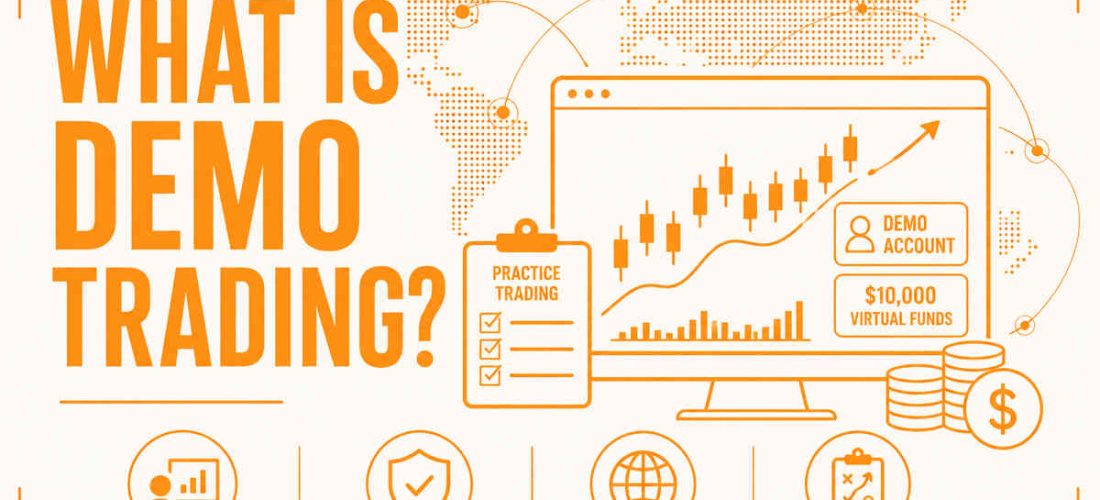
If you have ever asked yourself «what is demo trading», imagine a flight simulator for financial markets. But instead of crashing a Boeing 747, you crash a bad trade without losing a single real dollar. Demo trading lets you buy and sell stocks, forex, or crypto using virtual money while the market moves exactly as it does in the real world. No parachute. No safety net. But also no pain. It is the ultimate sandbox where you can swing for the fences, blow up your fake account, and wake up tomorrow with a fresh $100,000 to try again.
So what does that actually mean? The demo account trading meaning is deceptively simple: a risk-free playground where beginners learn the ropes, test wild strategies, and build the kind of confidence that normally takes years of painful losses. Think of it as training wheels for your trading ego. You get real time prices, real order books, and real adrenaline. Just without the real heartbreak. By the end of this guide, you will know exactly how to create a demo account, whether demo trading is actually useful or just a toy, and which platforms like FxPro and XM offer the best free setups to start practicing today.
Is Demo Trading Really Useful for Beginners?
Let us cut the crap. You have probably heard people say demo trading is just a video game. That it does not count. That real trading is a whole different beast. Here is the truth: demo trading for beginners is not only useful. It is absolutely necessary. Jumping into live markets without practice is like learning to swim in a shark tank. You might survive. But you will probably bleed cash first.
A demo account gives you something no book or YouTube video can: repetition without consequences. You can place 50 trades in an afternoon. Click the wrong button. Forget to set a stop loss. Buy instead of sell. All of that chaos costs you exactly zero dollars. That is how you build muscle memory. That is how you stop panicking when the chart suddenly drops like a rock.
Now let us talk about using a forex demo account specifically. Forex is fast. Leverage can blow up your account before you finish your coffee. A demo account lets you feel that speed without crying at the end of the day. You learn how spreads work. How slippage feels. How one bad news announcement can wipe out two weeks of gains. These are lessons you cannot memorize from a textbook. You have to live them. A demo account lets you live them in slow motion.
And for the more technical crowd, let us touch on learn dom trading. DOM stands for Depth of Market. It shows you all the buy and sell orders waiting in line. Professional traders use it to spot hidden support and resistance. Most beginners never even open that window because it looks like a spreadsheet had a seizure. But with a demo account, you can stare at the DOM for hours. Click on random prices. Watch how the order book moves. No pressure. No money on the line. Just pure learning.
So is demo trading useful for beginners? The short answer is yes. But only if you treat it like real practice, not a video game. Hit the buttons like your rent depends on it. Log every trade. Review your mistakes. That is how you turn a fake account into a real education.
Is Demo Trading Realistic Compared to Live Markets?
Here is where things get a little sticky. A demo account can teach you the mechanics. But does it feel the same as trading your own hard earned cash? The honest answer is no. And anyone who tells you otherwise is probably trying to sell you something. That does not mean demo trading is useless. It just means you need to understand the gap between simulation and reality.
Let us start with what is realistic. Prices move exactly the same on a demo account as they do on a live account. The charts do not lie. The spreads might be slightly better on demo (some brokers clean them up to look attractive), but for the most part, you are watching the real market. That makes is demo trading realistic a fair question with a nuanced answer. The data is real. The order execution is mostly real. The adrenaline is not.
When you trade with virtual money, your brain knows there is no risk. You will hold a losing position longer because it does not hurt. You will risk 50 percent of your account on a stupid trade because who cares. That is not how real trading works. In real life, fear creeps in. Greed takes over. Your hands shake when you hit the sell button. A demo account cannot simulate that heart pounding moment. No simulation can.
That is exactly why demo trading tutorial guides always tell you to treat fake money like real money. Set a rule. If you lose 5 percent of your demo account in one day, stop trading. Force yourself to feel the pain even when there is no pain. It sounds silly. But it works. The best traders use demos to build discipline, not to chase fake profits.
So is demo trading realistic? Technically, no. Practically, it is the closest thing you get without bleeding cash. Think of it as a flight simulator. A pilot who only uses a simulator will crash the first real plane. But a pilot who never uses a simulator will crash much faster. Use the demo to learn buttons, charts, and order types. Then start small with real money. That is the real demo trading tutorial worth following.
Is Demo Trading Legit or a Waste of Time?
Skepticism is healthy. You have seen plenty of “free” tools that turn out to be useless fluff. So let us address the elephant in the room. Does demo trading actually work, or is it just a clever marketing trick to get you in the door? The short answer is that is demo trading legit depends entirely on how you use it. The tool is legitimate. The lazy version is a waste of time.
Here is what makes demo trading legit. Every major regulated broker offers demo accounts. Not as a gimmick. As a requirement. Financial authorities in the UK, Europe, and Australia expect brokers to provide risk free practice environments. That means FxPro, XM, and hundreds of others have built their entire onboarding process around demo accounts. They are not doing that for fun. They are doing it because demo trading actually helps beginners survive long enough to become real customers.
Now let us talk about what is a demo trader. A demo trader is someone who uses a simulated account to practice buying and selling financial instruments without real money. That sounds obvious. But here is the distinction. A serious demo trader treats the fake account like a real one. They log every trade. They review their mistakes. They follow a strategy for 30 days before changing anything. A time waster just clicks buttons randomly, blows up the account in two hours, and says “demo trading is useless.”
The truth lands somewhere in the middle. Demo trading is legit as a training tool. It is not legit as an emotion trainer. You will never feel the sting of a $500 loss on a demo. That sting is a real part of trading. But walking into live markets without knowing how to place a limit order or read a candlestick chart? That is just dumb. Demo trading fixes the mechanical side so you can focus on the psychological side when real money is on the line.
So is demo trading legit? Yes. It is a legitimate educational tool used by professional traders, institutional firms, and everyone in between. Is it a complete replacement for live trading? Absolutely not. Treat it as step one. Not step ten. That is the difference between a real trader and someone who stays a beginner forever.
Do Demo Accounts Use Real Money?
Let us get straight to the point. This is the most common question beginners ask, and the answer could not be simpler. Do demo accounts use real money? No. Never. Not a single cent. Demo accounts run on virtual credits. Fake dollars. Monopoly money with better graphics. You can trade $100,000 like a hedge fund manager, lose every penny by lunchtime, and your real bank account will not even blink.
So where does the virtual money come from? Most brokers give you a starting balance between 10,000 and 100,000. It is not real. It is not withdrawable. You cannot buy a coffee with it. You cannot pay rent. All you can do is practice trading. Think of it as a video game where the score is fake but the rules are real. That is the whole point. You learn without risk.
Now for the second part of the equation. Are demo trading accounts free? Yes. Completely free. Zero cost. No credit card required. No hidden subscription. Brokers like FxPro and XM offer unlimited demo accounts because they want you to learn their platform before depositing real money. It is a win win. You get free practice. They get a potential customer who already knows how to use their buttons.
There is one small catch. Some brokers set an expiration date on demo accounts. Thirty days. Sixty days. Then the account freezes. But here is the secret. You can just open a new one. Same email. Same name. Fresh $100,000. No questions asked. Other brokers like FxPro give you unlimited time. No expiration. That is rare but beautiful.
So do demo accounts use real money? No. Are demo trading accounts free? Yes. Two simple answers. The only thing you lose on a demo account is your fake balance and your pride after a stupid trade. Both recover quickly.
How to Create a Demo Trading Account (Step by Step)
Create a Demo
Trading Account
in Minutes
You have made it this far. You know demo trading is useful, mostly realistic, legit, and completely free. Now comes the fun part. Actually getting your hands dirty. Below is a simple step by step breakdown of how to create a demo trading account from scratch. No hidden tricks. No fine print. Just action.
Step 1: Pick a broker.
Not all brokers are created equal. For beginners, stick with regulated names that have a reputation for fair execution. FxPro and XM are excellent starting points. Both offer free demo accounts with no time limits or easy renewal. Go to their website. Look for a button that says “Demo Account” or “Try Free Demo.” You cannot miss it.
Step 2: Click the button and fill out the form.
This is where you actually make demo trading account happen. The form usually asks for your name, email address, and country. Some brokers ask for a phone number. That is it. No social security number. No proof of address. No deposit. Type in your information, choose a password, and hit submit.
Step 3: Choose your platform.
Most brokers offer multiple trading platforms. MetaTrader 4 (MT4), MetaTrader 5 (MT5), cTrader, or their own web based platform. If you have no idea what to pick, go with MT5. It is modern, beginner friendly, and works on desktop and mobile. FxPro gives you all options. XM does the same. Pick one and move forward.
Step 4: Get your login details.
Within seconds, the broker will email you a username, a password, and a server name. Copy those into a safe place. Do not lose them. Then open the trading platform you chose, enter the credentials, and click login. Congratulations. You just learned how to create a demo trading account.
Step 5: Start clicking.
Your demo account comes preloaded with virtual cash. Usually $100,000. Find a currency pair like EUR/USD or a stock like Apple. Click buy or sell. Watch the number go up or down. That is it. You are now a demo trader.
Now let us talk about where to demo trade if you want options beyond FxPro and XM. You have choices. Webull offers stock and options demo trading. TD Ameritrade’s thinkorswim platform has one of the most advanced demo environments on the planet. Interactive Brokers provides a paper trading account for futures and global stocks. But for raw simplicity and zero friction, FxPro and XM remain the best places to start. They get you from zero to placing a trade in under three minutes.
One final tip. After you make demo trading account, do not just click randomly. Treat the first week as exploration. Click every button. Open every window. Try to place a market order. Try a limit order. Try a stop loss. Break things on purpose. That is how you learn without fear.
How to Trade on a Demo Account for Beginners
You have created your demo account. Virtual cash is sitting there waiting. Now what? Staring at a blank chart can be intimidating. All those squiggly lines. Red and green candles. Numbers moving every second. Here is exactly how to trade on a demo account for beginners without the headache.
- Pick one thing to trade. Do not look at forex, stocks, crypto, and commodities all at once. Pick a single market. EUR/USD is a great starting point. If forex feels weird, pick a stock you already know like Apple or Tesla. Remove the “what am I even looking at” confusion from day one.
- Understand buy vs sell. This is where how to start demo trading becomes mechanical. If you think the price will go up, click buy. If you think the price will go down, click sell. No magic. No secret formula. Buy button is usually green. Sell button is red. Click one. Your trade opens instantly.
- Start with tiny size. Your demo account may come with $100,000 in virtual funds, but it is smarter to trade as if you only had $1,000. This helps build realistic habits, proper risk management, and better emotional discipline from the start. Trade 0.01 lots on forex. Trade one single share of a stock. Trading small keeps your emotions calm so you can actually pay attention to what is happening.
- Watch what happens. After you open a trade, the number in your account will move. Up. Down. Sometimes fast. Sometimes slow. Do not panic. Do not close immediately just because you see red. Let it breathe for five minutes. For an hour. This is the core of how to do demo trading properly. You are not trying to win. You are trying to understand.
- Close the trade. When you are ready, click the opposite button. Bought? Click sell to close. Sold? Click buy to close. Your profit or loss shows up instantly. Green means you made fake money. Red means you lost fake money. Neither matters. What matters is you just completed a full trade cycle.
- Repeat the whole process fifty times. One trade teaches you nothing. Fifty trades teach you patterns. You will start noticing when price fakes you out. When momentum picks up. When to stay out. That is real learning. That is how to trade on a demo account for beginners like a pro.
One final piece of advice. Do not try to learn everything in one day. Spend twenty minutes on your demo account each morning. Click buttons. Make mistakes. Laugh at your fake losses. Within two weeks, the fear of trading will disappear. And that is when the real education begins.
How to Learn Trading With a Demo Account Effectively
Clicking buttons randomly on a demo account is fun. For about an hour. Then it becomes boring and useless. If you want actual skills instead of just entertainment, you need a system. Here is exactly how to learn trading with a demo account the right way. No fluff. No fake shortcuts.
- Treat fake money like real money. This is rule number one. If you would not risk $500 of your own money on a reckless trade, you should not risk $500 in a demo account either. Treat demo trading seriously to build realistic habits and proper risk management skills. Set a daily loss limit. If you lose 5 percent of your account, walk away. Force yourself to feel the pain even when there is no pain.
- Focus on one strategy for 30 days. Jumping between methods is a beginner trap. Pick one simple approach. Support and resistance. Moving average crossovers. Breakout trading. Whatever it is, trade only that strategy for an entire month. You cannot judge something as good or bad after three tries.
- Log every single trade. Open a notebook or a spreadsheet. Write down what you bought, why you bought it, the entry price, the exit price, and what you felt. After 30 trades, read the log. You will see your own patterns. That is pure gold. That is how to learn trading with demo account like a professional.
- Test one variable at a time. Want to know if a 20 period moving average works better than a 50 period? Run 20 trades with the 20 MA. Then 20 trades with the 50 MA. Compare results. Do not change your stop loss, take profit, and indicator all at once. That gives you zero useful data.
- Replay the same market session. Most demo accounts let you trade live prices. But some platforms like thinkorswim let you replay historical days. Trade the same three hour session from last Tuesday over and over. Each time, make a different decision. See what works. This is an advanced move that fast tracks demo trading for beginners.
- Set a realistic profit target. Do not aim for 1000 percent returns. That is fantasy. Aim for 1 to 2 percent per week. If you can make 2 percent consistently on a demo account, you have a real skill. If you cannot, go back to the log and figure out why.
- Walk away when you are tilted. Lost five trades in a row? Close the platform. Go for a walk. Watch a movie. Your brain is fried. Chasing losses on a demo account trains you to chase losses in real life. That habit will destroy your bank account later. Stop. Breathe. Come back tomorrow.
The goal of demo trading for beginners is not to become a millionaire in simulation mode. The goal is to build habits that keep you alive when real money is on the line. A demo account is a gym. You do not go to the gym once and expect six pack abs. You show up every day. You do the reps. You get slightly better each time. Do that for three months, and you will be ahead of 90 percent of beginners who never bothered to practice at all.
Advanced: How to Demo Trade Options, Stocks, and Futures
You have mastered the basics. You can buy and sell without panicking. Now it is time to level up. Options, stocks, and futures each behave differently. A demo account is the perfect place to explore these markets without risking a dime. Here is exactly how to demo trade options, stocks, and futures like someone who knows what they are doing.
How to Demo Trade Stocks
Stocks are the most straightforward market. You buy shares of a company. You hope the price goes up. You sell later for a profit. That is it. But how to demo trade stocks properly involves more than just clicking buy on Apple or Tesla.
- Trade the pre market and after hours. Most demo accounts let you trade extended hours. Stock prices move wildly before the opening bell. Practice catching those moves without real risk.
- Use limit orders instead of market orders. A market order buys at whatever price is available. A limit order buys only at your specific price. Demo trading is the perfect time to learn the difference before it costs you real money.
- Watch the bid ask spread. On liquid stocks like Microsoft, the spread is pennies. On tiny companies, the spread can be dollars. Demo trading teaches you which stocks are cheap to trade and which will eat your profits alive.
How to Demo Trade Options
Options are different. You are not buying shares. You are buying the right to buy or sell shares later at a specific price. Sounds complicated. But how to demo trade options becomes simple when you break it down.
- Start with calls and puts only. Ignore spreads, iron condors, and butterflies for now. A call bets the price goes up. A put bets the price goes down. That is enough to learn for the first two weeks.
- Look at the expiration date. Options expire every week or month. An option with 30 days left moves slowly. An option with 1 day left moves like a rocket ship. Demo trade both and feel the difference.
- Watch how theta eats your position. Theta is time decay. Every day your option gets closer to expiration, it loses value even if the stock price does not move. Demo trading shows you this invisible thief in action.
Free Demo Trading Futures
Futures are the fastest market. No joke. They move on weekends. They move at 2 AM. They move during lunch breaks. Free demo trading futures is widely available, but most beginners are too scared to try. Do not be that person.
- Start with micro futures. E mini S&P 500 futures are huge and scary. Micro E mini futures are one tenth the size. Same movement. Less risk. Perfect for free demo trading futures practice.
- Get used to leverage. Futures only require a small deposit to control a large contract. That cuts both ways. A 1 percent move can make or lose 10 percent of your account. Demo trading lets you feel that leverage without crying.
- Trade the overnight session. Futures trade almost 24 hours a day. Open your demo account at 3 AM and see what happens. Most beginners never do this. That is why most beginners get surprised when news drops while they sleep.
How to Demo Trade Across All Three
Now you know how to demo trade stocks, options, and futures separately. The real skill is switching between them. Spend one week on stocks. One week on options. One week on futures. Compare which market fits your personality.
- Stocks are for patient people who like company research.
- Options are for people who love leverage and hate sleeping well.
- Futures are for adrenaline junkies who want to trade while the world sleeps.
Your demo account lets you try all three for free. That is the beauty of how to demo trade without limits. No broker will stop you. No margin call will wake you up. Just pure exploration. Use it.
Best Apps for Demo Trading in 2026
Not all demo trading apps are created equal. Some are clunky. Some crash mid trade. Some hide fees until you accidentally click the wrong button. Finding a smooth, reliable app makes the difference between learning and frustration. Here is what makes a great apps for demo trading shortlist, followed by the two that actually deliver.
What to look for in a demo trading app
- No time limits. Some apps delete your demo account after 30 days. That is annoying. The best apps let you keep your history forever.
- Real time data without delay. Many free apps show prices that are 15 minutes behind. That is useless for learning. You need live ticks.
- One click switching between demo and live. When you finally move to real money, you want the same app. Same buttons. Same layout. No relearning.
- Mobile and desktop sync. Start a trade on your phone during breakfast. Check it on your laptop at work. The app should follow you.
- No spam or hidden upsells. Some brokers blast you with emails after you open a demo. The good ones let you practice in peace.
The two that get it right
FxPro
FxPro gives you unlimited demo accounts. No expiration date. No “your account will close in 14 days” nonsense. You can keep the same demo for years. They offer three platforms in one app: MT4, MT5, and cTrader. MT5 is great for stocks and futures. cTrader has the cleanest interface for forex. The mobile app is fast. Desktop version never lags. You can switch from demo to live in two clicks when you are ready. For apps for demo trading, FxPro checks every box.
XM
XM hands you a $100,000 demo account the second you sign up. No waiting. No verification. The app works on iOS, Android, and desktop. What makes XM stand out is the built in education. There are daily webinars inside the app. Video tutorials on how each button works. A economic calendar that tells you when news will move the market. The demo expires after 30 days, but you can renew instantly with one click. Same balance. Same history. Zero hassle.
So where to demo trade in 2026?
Now you know where to demo trade without wasting time on broken apps. Download FxPro if you want unlimited time and platform choice. Download XM if you want hand holding and daily education. Better yet, try both. They are free. Open FxPro on your phone. Open XM on your laptop. See which interface feels better. Your demo trading journey does not need permission. Just download, tap a few buttons, and watch the charts move.
The best apps for demo trading are the ones you actually use. Not the ones with the most features. Not the ones influencers promote. The ones that load fast, update prices instantly, and do not make you want to throw your phone across the room. FxPro and XM pass that test. Most others fail.
Conclusion
Let us wrap this up. Demo trading tutorial guides often paint a perfect picture. No risk. Free money. Instant skills. The truth is messier but still inspiring. Demo trading is not a video game. It is not a waste of time either. It is a legitimate training tool used by professional traders, hedge fund rookies, and everyone in between who refuses to lose real cash while learning basic buttons.
Here is the reality check. No simulation feels exactly like the real thing. Your heart will not race the same way. Your palms will not sweat when you hit sell. But that does not make demo trading useless. It makes it step one. And skipping step one is how beginners blow up their accounts before breakfast. So yes, is demo trading legit? Absolutely. As legit as a flight simulator for a pilot. You would never let someone fly a real plane because they watched a YouTube video. Same logic applies to your money.
For the data driven traders out there, learn dom trading on a demo account before attempting it live. Depth of Market is a whole different beast. Seeing the order book stack up with real bids and asks changes how you enter and exit trades. A demo account lets you stare at the DOM for hours. Click on random levels. Watch how liquidity moves. No pressure. No cost. Just pure education.
One final thought. Do not stay on demo forever. That is its own trap. Some traders hide in demo accounts for years because they are scared to lose. That is not growth. That is avoidance. Use the demo to build mechanics. Use it to test strategies. Use it to learn DOM, options, futures, and all the scary stuff. Then fund a small live account with money you can afford to lose. Trade tiny. Feel the real emotion. Make mistakes with $20 instead of $2,000.
Demo trading is the warm up. Not the main event. Treat it that way, and you will be ahead of 95 percent of beginners who never bothered to practice at all. Now go open that demo account and start clicking. Your future self will thank you.
FAQ
Is demo trading really useful?
Yes. It helps beginners understand order types, leverage, and platform navigation without any financial risk. Think of it as a driving school for your money.
Is demo trading realistic?
Partially. Execution is real time. The prices are real. The charts do not lie. But emotions like fear and greed are missing compared to live accounts. You cannot simulate a sweaty palm. But you can simulate everything else.
Is demo trading legit?
Absolutely. Every regulated broker offers demo accounts as a required educational tool. Financial authorities in the UK, Europe, and Australia expect brokers to provide risk free practice environments. It is not a gimmick. It is standard.
Are demo trading accounts free?
Yes. 99 percent of brokers provide them at zero cost with no deposit required. No credit card. No hidden subscription. Just free practice.
Do demo accounts use real money?
No. They use virtual credits, usually between 10,000 and 100,000 in fake balance. You can lose every penny and your real bank account will not even blink.
How to do a demo trade in 3 steps?
Open a demo account. Select an asset like EUR/USD or Apple stock. Click buy or sell. That is it. You are now a demo trader.
How to start demo trading as a complete beginner?
Download an app like MetaTrader 5 or the mobile app from FxPro or XM. Register with your email. Start clicking buttons. No permission needed. No experience required.
How to learn trading with a demo account effectively?
Treat it like real money. Log every single trade in a notebook or spreadsheet. Test only one strategy for 30 days before changing anything. Do not click randomly. That is how you learn nothing.
Where to demo trade stocks and options?
Webull, TD Ameritrade (thinkorswim), and Interactive Brokers offer free demo trading for stocks and options. Each has a slightly different feel. Try them all and see which one clicks.
What are the best apps for demo trading?
For a realistic demo trading experience, two brokers stand out:
- FxPro offers unlimited demo accounts with MT4, MT5, and cTrader. No time limits. Ideal for forex and futures. You can keep the same demo account for years without expiration.
- XM provides a free $100,000 demo account for 30 days, renewable with one click. Great for beginners because of the built in tutorials, daily webinars, and economic calendar inside the app.
Other platforms exist, but if you want reliability and zero friction, start with FxPro or XM.


